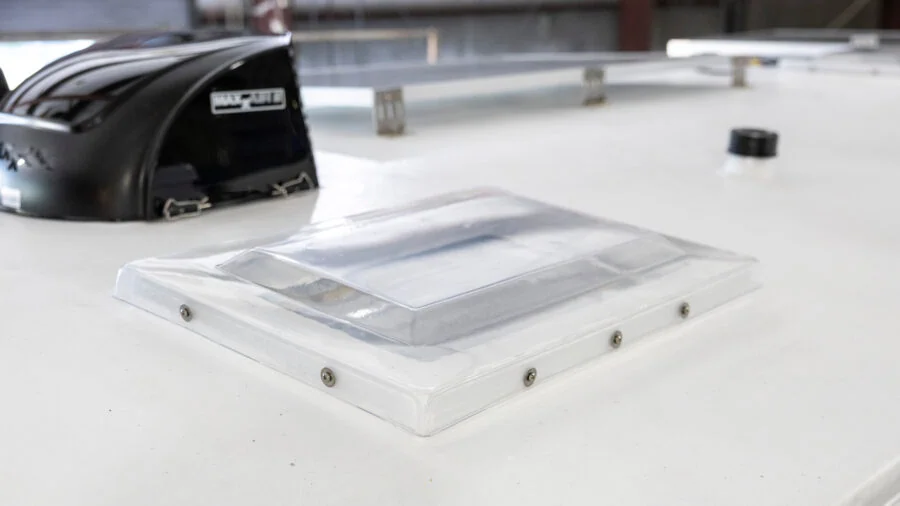
Roof flashing around vents, A/C units, antennas, and skylights is one of the more common places where leaks start in an RV. Unfortunately, traditional flashing often fails long before the roof membrane does, allowing water to sneak in and cause hidden damage. Eventually, the outward signs start to appear. Bubbles on the ceiling, rusty dripping from interior screws, or moisture around light fixtures let you know water has found a way inside. Even the best roof sealant for leaks will not prevent these problems once damage has already begun.
Understanding why and how flashing fails can help RV owners take steps to protect their roofs and avoid costly repairs down the road.
What is RV Roof Flashing?
RV roof flashing is a thin material, typically made of metal, such as aluminum, copper, or steel. It is installed at joints, seams, and along the edges of your RV roof to act as a watertight barrier, redirecting water away from vulnerable areas.
It is commonly used around vents, A/C units, antennas, skylights, and other areas where RV roof leaks are most likely to occur. When functioning properly, flashing works in combination with roof sealant to keep water out of your RV.
Common Reasons Why RV Roof Flashing Fails
Why does flashing often fail long before the roof membrane? In most cases, it’s not a single issue but a combination of factors that gradually break down the flashing over time, even when you’re using the best roof sealant for leaks. Here are the most common reasons why RV roof flashing fails:
- UV damage – Roof flashing is constantly exposed to sunlight. Over time, the sun’s ultraviolet (UV) rays can cause cracking, drying, and separation at the edges, where moisture can enter.
- Vibration – When you’re on the road, your RV is subject to constant movement. These subtle vibrations can slowly loosen fasteners and create small gaps between the flashing and the roof membrane, giving water space to enter.
- Thermal expansion – RV roof membranes expand in high heat and contract in cold temperatures. Eventually, this repetitive cycle puts enough stress on the flashing that even the best roof sealant for leaks will struggle to keep water from seeping in.
Inspection Tips RV Owners Should Perform Each Month
How can RV owners prevent a flashing failure before it becomes a major problem? The key is consistent inspections and early detection. Ideally, RV owners should self-inspect their roof at least once a month.
Each month, take a few minutes to check your RV roof and interior for early warning signs of flashing failure. Here are a few things to look for:
- Cracks of tears in the roof membrane
- Bubbling, discoloration, or soft spots on interior ceilings
- Visible gaps or worn-out sealant around vents, A/C units, and roof edges
- Flashing pulling away, cracking, or showing signs of rust
If you notice any of these issues, roof sealant can be used as a short-term fix for leaks. However, even the best roof sealant for leaks is a temporary solution when flashing failure is already underway.
How to Eliminate RV Flashing Failure Risk
Want to eliminate the risk of flashing failure entirely? Flexarmor creates a seamless, spray-applied seal around every penetration, protecting your RV before leaks ever start. Made from a patented, pure polyurea spray, FlexArmor dries to the touch in seconds. It’s the first and only of its kind, and it stands out among the crowd of roof sealants for leaks. Eliminate RV roof flashing problems for good with FlexArmor. Contact us today to get an estimate.