If you’re searching for how to reseal an RV roof, chances are you’re dealing with cracked sealant, recurring leaks, or signs of water damage. Resealing is one of the most common maintenance tasks RV owners face, and it’s also one many find themselves repeating year after year.
While resealing can temporarily protect your RV, it doesn’t solve the underlying problem. Traditional RV roofs rely on seams, caulking, and sealants that eventually fail. In this guide, we’ll explain how to reseal an RV roof, the risks to watch for, and why many RV owners choose FlexArmor to eliminate the resealing cycle altogether.
What Does It Mean to Reseal an RV Roof?
When people talk about resealing an RV roof, they’re usually referring to maintaining the sealants that protect roof penetrations and seams from water intrusion. A typical resealing project involves:
- Cleaning the roof surface
- Inspecting seams, vents, skylights, antennas, and roof edges
- Removing cracked or failing sealant
- Applying new RV roof caulk or sealant
- In some cases, applying a roof coating over larger sections of the roof
The goal is simple: prevent water from entering the RV. While this process can help extend the life of a traditional roof, it is considered routine maintenance rather than a permanent repair.
Why Traditional RV Roofs Need Resealing Every Few Years
Most RV roofs are built using materials such as:
- EPDM rubber roofing
- TPO roofing
- Fiberglass roofing
These materials perform well when properly maintained, but they all rely on sealants around seams and roof penetrations. Over time, several factors cause those sealants to break down:
UV Exposure
Constant sunlight causes sealants to dry out, shrink, and crack.
Temperature Changes
RV roofs expand and contract as temperatures fluctuate. This movement puts stress on seams and caulk lines.
Road Vibration
Every mile traveled creates movement throughout the RV structure. Over time, that vibration can weaken sealants and create small openings for water to enter.
Weather Exposure
Rain, snow, hail, and debris all contribute to wear and tear on roof components.
Because of these factors, many manufacturers recommend inspecting and resealing your roof every 12 to 24 months.
The Risks of Resealing Your RV Roof
Resealing sounds straightforward, but it’s easy for problems to go unnoticed.
Hidden Water Intrusion
A roof may look fine from the surface while water is already working its way underneath the roofing material. By the time stains or soft spots appear inside the RV, moisture may have been present for months.
Missed Problem Areas
Small cracks around vents, antennas, or roof edges can be difficult to spot during a DIY inspection. Even tiny gaps can allow significant water intrusion over time.
Repeated Leak Repairs
Many RV owners find themselves repairing the same sections of their roof year after year because the underlying roofing system hasn’t changed.
Structural Damage
Long-term leaks can lead to:
- Rotted roof decking
- Damaged insulation
- Delamination
- Mold growth
- Interior ceiling and wall damage
What starts as a simple resealing project can eventually become a much larger repair.
The Real Cost of Resealing an RV Roof
Many RV owners choose resealing because it appears to be the least expensive option upfront. However, those costs add up over time. Over a five- to ten-year period, RV owners may spend money on:
- Sealants and roof coatings
- Annual inspections
- Leak repairs
- Water damage remediation
- Interior repairs
- Roof maintenance labor
Even with diligent maintenance, traditional roofing systems continue to age and require ongoing attention. The result is a recurring cycle of maintenance that never truly ends.
How FlexArmor Eliminates the Need for Resealing
FlexArmor was designed to solve the problems that make traditional RV roofs vulnerable in the first place. Unlike rubber, TPO, or fiberglass roofing systems, FlexArmor is a seamless, spray-applied roofing membrane.
No Seams
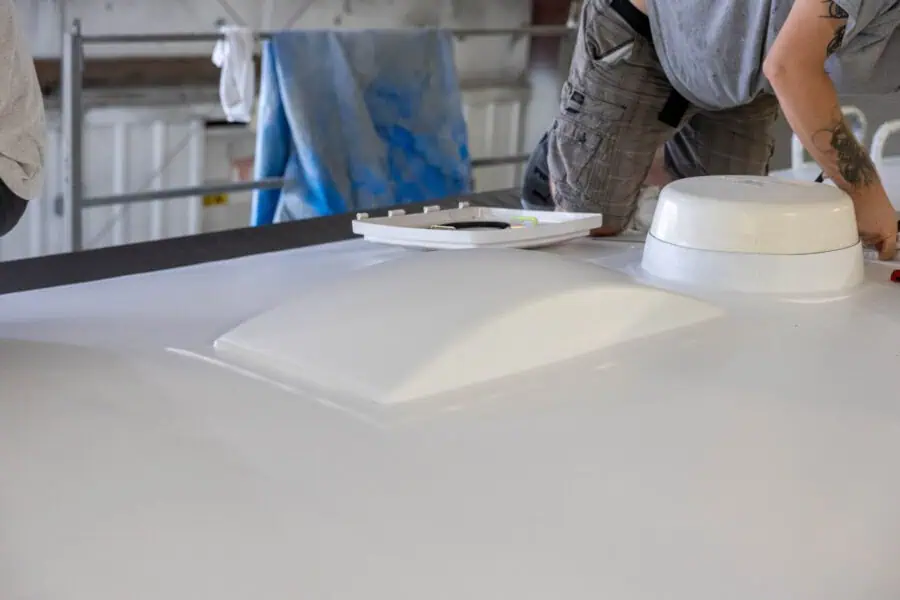
Because FlexArmor is sprayed directly onto the RV roof as a single continuous membrane, there are no roof seams that can separate or fail.
Fully Encapsulated Components
Vents, skylights, plumbing stacks, antennas, and other roof penetrations are permanently integrated into the roofing system. This eliminates many of the common leak points found on traditional roofs.
Thick and Durable Protection
FlexArmor is applied significantly thicker than traditional roof coatings, creating a durable barrier against:
- UV exposure
- Road vibration
- Extreme temperatures
- Impact damage
[You can get a free sample of FlexArmor here.]
Lifetime Transferable Warranty
Perhaps most importantly, FlexArmor is backed by a lifetime transferable warranty. Instead of planning your next resealing project, you can enjoy the confidence that comes with a roof designed to last.
Is It Time to Stop Resealing Your RV Roof?
Learning how to reseal an RV roof is valuable knowledge for any RV owner. But if you find yourself repeatedly repairing leaks, replacing sealant, or worrying about hidden water damage, it may be time to consider a different approach.
Traditional RV roofs require ongoing maintenance because their seams and sealants eventually fail. FlexArmor eliminates those weak points with a seamless roofing system built for long-term protection. If you’re tired of the reseal-and-repair cycle, a FlexArmor roof may be the last roof your RV ever needs.
Contact a FlexArmor Installer Near You
Wondering whether your current roof needs another reseal or a more permanent solution? Contact your nearest FlexArmor certified installer for a professional roof inspection. We’ll help you understand the condition of your roof and determine whether FlexArmor is the right fit for your RV.